

February 9th, 2022
She Was Different: Betty Davis

This piece does not contain all of the music or all of the story. It couldn’t. Betty Davis left behind more work, more sound, and more complexity than any single essay can hold. I came to her music and the history around it later than I should have, and what I found kept widening the frame faster than I could follow.
If this account feels incomplete, that’s because it is. The only way to understand what’s here is to listen to the records themselves and to keep reading beyond this page. The music carries things no narrative can replace.
Betty Davis is still framed through other people and later moments rather than her own decisions. History still filters her through a stack of labels that pretend to explain her while carefully refusing to deal with what she actually did. You will see her introduced as a former wife, a cult figure, a funk footnote, or someone ahead of her time, as if delay were an accident.
These descriptions sound explanatory, but they all perform the same function, they move her out of the present tense and avoid naming what made her unacceptable when she was alive. They imply that her marginalization was a misunderstanding or a delay instead of a structural choice.
Record labels made choices about marketability that doubled as discipline. They were willing to sell danger but not grant authorship. Critics made choices about language, reaching for words like feral, excessive, obscene, unhinged, anything that let them avoid calling her ground breaking. Radio programmers made choices about what could be played in daylight. Promoters made decisions about who could sell sex on stage.
Betty Davis does not need to be rescued from history or reintroduced with reverence. She was fully present in her own moment, speaking plainly, writing deliberately, and making decisions that landed exactly as intended. The problem was never that people failed to understand her. The problem was that they understood her clearly and did not like what that clarity required of them.
She wrote the songs, shaped the image, produced the work, and insisted that women’s sexual authority sit at the center of her music without being filtered through romance, or apology, a refusal that mattered because it was immediate and unmistakable. Desire was not offered up as spectacle or invitation. It was directed, asserted, held in her control, and she did not present herself as a muse waiting to be interpreted but as an author who had already decided what she meant.
That combination was legible right away, which is why the response came so quickly and so predictably. Critics reached for caricature instead of analysis because analysis would have required taking her seriously on her own terms. Radio did not argue with her or condemn her outright. It simply stopped playing the records.
Respectability organizations objected. Labels hesitated, delayed, and eventually shelved finished work. None of this happened because Betty Davis was confusing or unclear. It happened because she was precise and knew exactly what she wanted and refused to back down.
February 9 is not a celebration. It is the day Betty Davis died. Like so many dates attached to women who moved too fast and spoke too clearly, it became the moment institutions finally loosened their grip and said out loud what they had refused to say while she was alive. The praise came late. That is not incidental. It is the point.
History has a pattern. It praises women like Betty Davis only once they can no longer disrupt anything. Only after the records have been shelved. Only after the radio bans have done their work. Only after refusal has been reframed as disappearance. Only after the woman herself has stepped out of the frame entirely. February 9 is the day that pattern becomes visible if you are willing to look at it straight.
This is not a music story in the way the industry prefers to tell them. It is not about rediscovery, cult status, or belated flowers. It is a power story. It is about what happens when a Black woman claims control early, visibly, and without softening herself to make others comfortable. It is about how institutions respond to that kind of clarity. It is about how erasure disguises itself as confusion long after the decisions have already been made.
Betty Davis did not drift into misfit status or fail some unspoken test. She made placement impossible by design. The records were intentional, the performances structured, the sexuality directional, moving outward from her body toward the room instead of inward toward approval, and that orientation mattered because it refused the usual terms of consumption. Watching her live, you can see it in how the energy travels, how nothing is offered up for easy use, how attention is forced to reckon rather than absorb.
Men were repositioned inside that structure, no longer treated as default geniuses or rescuing figures but handled as subjects, sometimes as objects, sometimes as obstacles to be negotiated or dismissed, an inversion that alone was enough to unsettle the order of things. Add to that her insistence on writing the songs, shaping the image, producing the work, and holding control over her career as a single, indivisible act, and the institutional response of the 70’s makes sense.
If you want to understand how Betty Davis arrived at that level of clarity so early, you can’t begin with the industry that tried to manage her, or with New York, or with Miles Davis, or with the stage and studio mythology that accumulated later, because all of that came after the terms were already set. You have to go earlier, further south, to a moment before labels and bans and respectability language hardened into systems, before anyone had the vocabulary ready to explain her away.
You have to go to North Carolina.
Betty Gray Mabry was born in July 1944 in Durham, North Carolina, the first child of Henry Mabry, an Army serviceman, and Betty Mabry, a homemaker. Her parents’ lives were shaped by military schedules, domestic labor, and the limited options available to Black families in mid-century North Carolina.
She did not grow up chasing stages or audiences. She grew up in Reidsville, Rockingham County, NC, raised largely by her grandmother on a farm outside town. That is where her days took shape. At first it was not rehearsal or ambition. Her life was filled the routine of a farm.
The grandmother’s house was not quiet. Music was always present. Blues records played while southern food was cooked and chores were done. Lightnin’ Hopkins. Muddy Waters. John Lee Hooker. The records were not treated as special objects or instruction manuals. They were part of daily life, as ordinary as the sound of pots on the stove or chickens being fed in the yard.
Listening was constant and physical. It happened while bodies worked. While animals were tended. While meals were prepared. The women in that house did not lower their voices. They talked plainly. They cooked heavily. They laughed loudly. They carried memory without softening it.
Desire was not hidden, and appetite was not treated as shameful. Nothing in that environment suggested that a woman needed permission to take up space or speak directly. This is where Davis learned her relationship to sound and authority. When Davis later sang about hogs humping to John Lee Hooker, she was not reaching for shock.
She was reporting. When she refused to separate sex from humor, labor from pleasure, power from appetite, she was not inventing a stance. She was naming a memory. Reidsville was not a backdrop. It was training., not in music, but in clarity. In seeing things straight and calling them what they were. In understanding that life did not apologize for itself, and neither should you.
Durham.
Reidsville.
A grandmother’s house.
Blues records playing while food cooked.
A child learning to listen before she ever learned to perform.
She left North Carolina physically as a teenager, first to Pittsburgh when her father took work in the steel mills, then on to New York at sixteen to attend the Fashion Institute of Technology. But the shape of her attention did not change. She carried the same listening with her. The same refusal to prettify. The same sense that sound came from the body before it ever belonged to an industry.
Even at the height of her visibility, when she was modeling, recording, moving between cities, she returned to Reidsville. She went back to her grandmother’s house to eat, to listen, to rest. She shopped in town. She sat in familiar rooms. She did not perform her roots. She used them.
When it came time to form a band in the mid-1970s, she did not look first to Los Angeles or New York. She turned back to North Carolina. To cousins. To people who already knew how she moved, how she listened, how little patience she had for nonsense. Drummer Nicky Neal. Bassist Larry Johnson. Friends they had grown up with. Musicians shaped by the same region, the same sounds, the same unembellished relationship to rhythm.
This was not nostalgia. It was practicality. She trusted people who did not flinch at her language or her appetite. People who did not need her explained to them. People who had grown up inside the same kind of music she did, influenced by the same sounds, smells and refusal to sell out before that it was even a term used by the public.
She left North Carolina physically as a teenager, first to Pittsburgh when her father took work in the steel mills, then on to New York at sixteen to attend the Fashion Institute of Technology. But the shape of her attention did not change. She carried the same listening with her. The same refusal to prettify. The same understanding that sound came from the body before it ever belonged to an industry.
New York did not teach her how to become someone else. It gave her room to sharpen what she already was.
At FIT, she was one of the few students of color, studying design and construction while moving through a city already thick with music, fashion, and argument. Modeling work followed quickly. She signed with Wilhelmina. She appeared in magazines like Seventeen, Glamour, Ebony. She learned how images were built, how bodies were framed, how desire was sold and softened for public consumption.
She also learned how empty that process could be. She did not mistake visibility for power. She learned how fashion industries translate desire into something marketable and safe. She also learned how hollow that translation could be.
She moved through Greenwich Village at night, not as a fan, not as a hopeful, but as someone already working. She waited tables at Café Figaro, listening to poets, musicians, and talkers argue about art and freedom while watching who actually got paid, who got remembered, who disappeared into other people’s stories.
She was not waiting to be discovered. She was writing songs by then. Humming arrangements. Building parts in her head. Treating composition as something physical, something that came from breath and rhythm before it ever reached paper.
She cut early singles. She wrote “Uptown” for the Chambers Brothers, a song that would outlive many of the men who passed through her orbit. She worked with musicians across genres without aligning herself to any one camp. She moved easily between fashion studios, clubs, rehearsal rooms, and recording spaces, not as a hanger-on, but as someone with something to deliver.
She was also building social infrastructure. In New York, she was part of a circle of young Black women known as the Cosmic Ladies, a group with enough style and presence to shape rooms simply by entering them. She hosted a private club called the Cellar, creating a racially integrated bohemia on her own terms. These were not side projects. They were expressions of control. She was curating space before she ever curated sound.
This is where the lies of how she is most often introduced break down.
She did not become an artist because she met famous men. She met famous men because she was already an artist. She did not stumble into authorship through proximity. She exercised it openly, early, and without apology. That made people uneasy long before it made them impressed.
By the time she entered recording studios in any formal sense, she already understood the mechanics of credit, image, and authorship. She had seen how women were framed as muses, how their labor was absorbed and renamed, how proximity replaced attribution. She was not interested in that role. She was writing her own material. She was shaping her own presentation. She was already deciding what she would and would not give away.
The industry did not create Betty Davis. It encountered her.
By the time New York labels and musicians began to circle her, she already knew how scenes functioned. She had seen how women were positioned as muses instead of makers, as atmosphere instead of authors. She had watched credit move away from women even when the work originated with them. She was not interested in proximity. She was interested in control.
Miles Davis appears here in the life of Betty Davis after she was already fully formed as an artist. When they met in the late 1960s, neither of them was looking for instruction or permission. Both were already used to reshaping the spaces they entered, and whatever followed came out of that fact. For now that is all this section needs from that moment, but this a time period the deserves its own explanation.
Later in the 70’s at the height of her visibility, when she was modeling, recording, moving between cities, she returned to Reidsville. She went back to her grandmother’s house to eat, to listen, to rest. She shopped in town. She sat in familiar rooms. She did not perform her roots. She used them.
That return mattered.
When it came time to form a band in the mid-1970s, she did not look first to Los Angeles or New York. She turned back to North Carolina. To people who already knew how she moved, how she listened, how little patience she had for nonsense. Drummer Nicky Neal. Bassist Larry Johnson. Friends they had grown up with. Musicians shaped by the same region, the same sounds, the same unembellished relationship to rhythm.
She trusted people who did not flinch at her language or her appetite. People who did not need her explained to them. People who had grown up inside the same kind of music she had, influenced by the same blues records, the same kitchens, the same refusal to sell out before “selling out” was even a public accusation. They understood timing without being taught it and when to stay out her way.
That decision alone tells you more about her authorship than any industry profile ever did.
When Betty Mabry met Miles Davis in the late 1960s, he was already famous and volatile, protected by a system that translated cruelty into genius and jealousy into temperament. She was much younger, less known, but already writing her own songs. That imbalance mattered immediately, and it shaped everything that followed.
Inside the house they shared, the music that mattered did not come from the jazz canon Miles Davis had already mastered. The records playing were Jimi Hendrix, Sly and the Family Stone, James Brown, Otis Redding. Betty Davis did not introduce these sounds as theory or suggestion. She played them. She took Miles Davis to shows. She insisted he listen. She talked about what she was hearing without deferring to his reputation or credentials.
Once the work moved into public view, Betty Davis was no longer treated as part of it, even when her presence was still visible. She appeared on the cover of Filles de Kilimanjaro, photographed, named, and unmistakably there at the moment Miles Davis’s sound was shifting toward electricity, groove, and repetition.
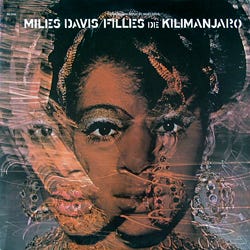
That record sits directly on the road to Bitches Brew, and it carries the same turn she had been pressing inside the house: rock rhythm, funk structure, amplification, insistence.
The shift in his work followed quickly. Electric keyboards moved forward. Rock rhythm took hold. Long, repetitive structures replaced tidy forms. Sound stretched and production changed. That turn did not come from nowhere. It came from exposure, repetition, argument, proximity. It came from living with someone whose ears were already pointed in that direction.
The listening she brought into his daily life did not disappear when the music reached the studio. It shows up in the way the band is assembled, in the move away from tidy jazz forms, in the weight given to rhythm and texture over harmony, in the willingness to let sound repeat instead of resolve. Bitches Brew was created during a period of exposure, argument, and proximity in which Betty Davis was present, audible, and whose influence is impossible to miss.
What history does next is predictable. Her name drops out. The music stays. The transformation is credited upward.
Miles Davis did not help this process. In his autobiography, he dismissed her as “too much,” as wild, as disruptive. He did not credit her influence. He minimized her presence. He wrote as if the shift in his sound had emerged internally, fully formed. That erasure is not accidental. It is part of how power and the patriarchy preserves itself.
Betty Davis told a different story, and she did not dress it up.
She said plainly that the music she played in the house influenced him. She said she loved him. She also said he became violent. She said his temper turned physical. She said she left because she was not going to stay in an abusive relationship. That was not an artistic disagreement. That was a line she refused to cross.
The jealousy mattered too. She has said that Miles Davis was afraid she would become famous on her own terms. Afraid she would leave him if she did. Afraid of what her independence represented. That fear shows up later in ways history prefers not to dwell on. Unreleased recordings. Shelved projects. Silence where opportunity should have been.
There has been a long-running story that Betty Davis was the one who introduced Miles Davis to Jimi Hendrix personally, that she brought them together as friends or collaborators. She denied that, repeatedly. She never claimed ownership of that connection. What she claimed was simpler and harder to dismiss. She played the music, took him to shows, changed what he was listening to. That distinction matters, because it keeps the focus where it belongs, on influence exercised through daily life rather than legend.
After the marriage ended, the asymmetry sharpened. Miles Davis moved forward with institutional backing, critical protection, and an expanding mythos. Betty Davis moved forward into resistance. Her clarity, which had been useful inside the house, became dangerous outside of it. A Black woman who wrote her own songs, controlled her image, refused deference, and spoke openly about sex was not something the industry wanted to handle head-on.
So her influence got reframed.
The music moved forward and accumulated praise. Her involvement did not. The records were discussed, taught, and canonized without her name attached, as if the conditions that shaped them were no longer relevant once they entered the archive.
This is not about proving that Betty Davis “deserves credit” for Bitches Brew. That framing misses the point. Her influence was not invisible. People around Miles Davis knew it. Musicians have said it. She said it. The issue is not whether it existed. The issue is how quickly it was absorbed and how thoroughly it was stripped of attribution once it threatened the balance of power.
What she took from that period was not bitterness. It was information.
She learned how quickly influence could be extracted without acknowledgment. She learned how violence, jealousy, and control were excused when wrapped in genius. She learned how easily a woman’s authorship could be recoded as atmosphere. That knowledge shaped what she did next, and it explains why she chose control over access when she built her own work in the 1970s.
Before moving on, her voice needs to interrupt the record, not as commentary, not as memory, but as intention. She said it herself in 1974, talking about why she moved carefully and deliberately through the business, knowing exactly what she had seen and what it cost.
Betty Davis did not describe what followed as confusion or heartbreak. She described it as information. She had watched how musicians were used up, how pain was repackaged as temperament, how control was quietly transferred once access was granted. By 1974, she was already moving with intent, already deciding where she would and would not place herself inside that system. In an interview that year with Army Reserve DJ Al Gee, she said it plainly.
“I’ve known a lot of musicians and I know what they’ve gone through. I know a lot of pain that they’ve gone through. And so I really wanted to get into the business the right way. I really had to say, ‘OK, this is what I want to do, and this is why I want to do it.’”
That interruption belongs here, because nothing about what followed makes sense without it.
By the mid-1970s, Betty Davis had stopped waiting for the industry to explain itself. In a 1976 interview with Penthouse, she described what she was encountering without theory or euphemism.
“Women are supposed to scream for Mick Jagger and try to pull off a man’s clothes on the stage. But men are supposed to be in control on all levels. A lot of them might really want to jump up and pull off my clothes, but they know they aren’t supposed to. It makes ’em feel weird and uptight.”
She was not talking about sex. She was talking about regulation.
Men were permitted to be desired and to command desire at the same time. Women were expected to receive it, perform it, and return it without altering its direction. What she did instead was take control of where desire moved and who it answered to. She named it openly and used it in public, without apology or deflection, and that shift unsettled people who were accustomed to having their authority reflected back at them.
She wore thigh-high silver boots, sheer fabrics, leather, feathers, outfits that did not suggest innocence or coyness, outfits that said the woman onstage already knew exactly what she was doing and did not need permission to do it.
Her songs did not frame sexuality as confession or vulnerability. They framed it as choice. The woman speaks. The woman decides. The woman sets the terms. Men appear as participants, sometimes as obstacles. That was enough to trigger resistance.
She sang about picking men up rather than waiting to be chosen, about refusing romance outright when it served no purpose, about men treated as objects of use, curiosity, irritation, or pleasure, about whipping a lover with a turquoise chain, and about appetite expressed plainly, without apology and without accepting punishment as the cost of speaking it aloud.
Radio stations stopped playing her records. Religious groups complained. The NAACP objected, arguing that her lyrics reinforced negative stereotypes, a charge that has long been used to discipline Black women who refuse approved roles. None of these responses required misunderstanding. They required recognition.
The refusal was not dramatic. It took the form of fewer ads, fewer bookings, fewer paths forward that did not come with conditions attached. Doors closed without explanation. The system did not argue with her. It enforced limits and waited for her to adjust, but she refused.
The early albums are now spoken about as objects, something to be rediscovered, boxed, and reissued, but that language strips them of function. Betty Davis and They Say I’m Different did not arrive as artifacts waiting for a market to catch up. These records were built to apply pressure, aesthetic pressure and social pressure at the same time, and they did so without disguising their intent.
The first two albums did not arrive as compromises. Betty Davis landed in 1973 like a dare. The cover alone made the point before the needle ever dropped. She stands in silver lamé boots that climb past the knee, body angled forward, gaze unbothered, uninviting, unashamed. She does not give an invitation, she was making a statement.
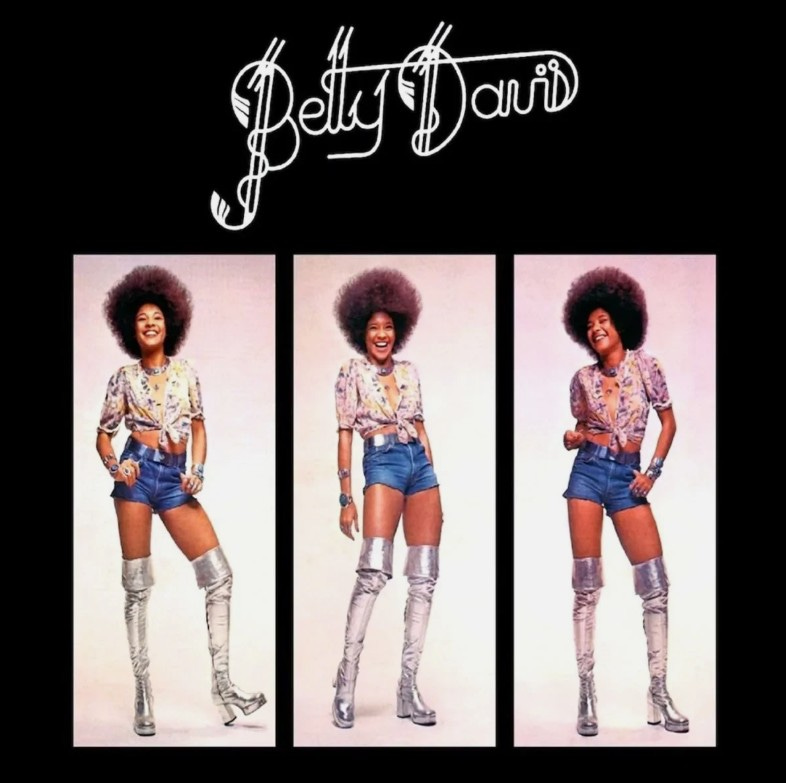
Then the music starts.
The sound establishes that immediately. The blues is not sentimentalized but weighted down and held low. Funk is tightened with rock force rather than loosened for dancefloor comfort. Guitars cut hard and dry instead of shimmering. Drums do not decorate or swing around the vocal but drive it forward, repetitive and insistent.
The arrangements leave little air. Her voice does not ease the listener in or offer polish as a concession. It presses forward, rough, nasal, confrontational, and it does not pause to negotiate its presence. There is no pretense of accessibility. The records announce themselves and continue.
The lyrics operate under the same logic. On both albums, the woman speaks without apology and without insulation. Power remains with her throughout the exchange. Shame is not entertained as a governing force. In songs like “If I’m in Luck I Might Get Picked Up,” “Anti Love Song,” “Don’t Call Her No Tramp,” and “He Was a Big Freak,” the language is blunt and the terms are explicit.
Desire is stated rather than implied. Judgment is rejected rather than argued against. The woman acts and names her action. The situation responds. Nothing is softened to make the encounter safer for an outside audience. This posture did not confuse institutions. It forced them to decide.
By the time They Say I’m Different arrived in 1974, the music had grown heavier, darker, less forgiving. The title track opens with a genealogy rooted in Southern memory and appetite, naming hogs, sex, family, blues, and bodily knowledge without translating it for outsiders. The album cover pushes the point again. She appears as something other than approachable, adorned, armed, unmistakably in control of the frame.
Radio stations made choices about what they would and would not play, particularly on Black-oriented formats that were already under pressure from advertisers and station owners. Some stations refused the records outright. Others limited airplay to late hours or dropped them entirely.
The NAACP publicly objected, framing the work as damaging to racial uplift, a familiar move when Black women refuse respectability as a requirement for public voice. Critics leaned into caricature, emphasizing provocation and excess, because grappling with her authority as a writer and conceptual artist would have required acknowledging her control rather than dismissing it as spectacle.
The records kept circulating among musicians and dancers, played in houses, clubs, and backstage rooms and passed hand to hand in the spaces where sound lived, even as distribution constricted, promotion dried up, and institutional support quietly withdrew in ways that limited access without ever stopping the music from moving.
The industry’s response clarified the terms. A Black woman exercising that degree of sexual and artistic control would not be buffered from backlash. She would not be given time to develop within the system. She would not be accommodated on her own terms. Compliance was the only path offered, and compliance required surrendering authorship.
She did not comply.
She adjusted accordingly.
She went home.
This is where the return to North Carolina matters, not as another memory, not as comfort, but getting work done. She did not look first to Los Angeles, Tokyo or even New York when it came time to build the next phase of her work. She turned back to people who already knew how she moved and did not require translation in Reidsville, NC.
She needed a band that did not flinch at her language or her appetite, a band that did not mistake her authority for attitude, a band that understood timing without being taught it. That shared history mattered. It made rehearsal sharper. It made performance tighter. It made trust possible.
Nasty Gal comes directly out of that alignment. The record does not soften. It does not retreat from the backlash. It leans into it. The grooves are thicker. The guitar cuts harder. The songs are louder about sex, about control, about refusal.
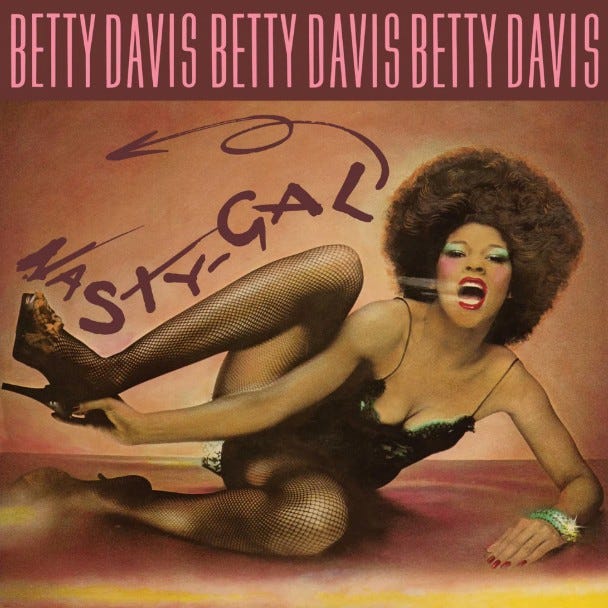
The title alone is a challenge. The performances that followed were physical, rehearsed, confrontational. The band moved as a unit. The spectacle was intentional. Nothing was left to accident. It was not just a funk record, but a North Carolina record carried onto national stages.
A record shaped by Southern self-reliance, by people who knew how to work without permission, by musicians who did not need the industry to validate what they were hearing.
Even then, the gates did not open.
Island Records released the album, pushed it briefly and stopped. Finished work went unreleased. Support thinned. Silence followed. The audience remained, small and intense. None of this reflected confusion about the music. It reflected a decision about the woman making it.
What this sequence makes impossible to ignore is that erasure does not require failure. It requires refusal. The refusal to bend. The refusal to redirect desire. The refusal to let authorship be absorbed and renamed once it becomes inconvenient.
Betty Davis understood that early. She acted on it deliberately. North Carolina was not where she went backward. It was where she tightened control when everything else tried to take it from her.
By the end of the 1970s, Betty Davis was no longer living inside the industry’s churn. She had left the circuit and settled back into a smaller life in Pennsylvania, close to the place she had lived as a teenager after her family moved north for mill work, moving back and forth to North Carolina to see relatives, spending her days outside of recording schedules, modeling contracts, and the demands of visibility, and doing so without drama or collapse.
Nothing had fallen apart.
There was no public implosion, no addiction narrative, no onstage unraveling that could be used to explain her absence after the fact. The records had been made. Songs existed, written and rehearsed and recorded with bands that were tight and disciplined, work that was ready to move if anyone had been willing to move it. What stalled was not the music. It was the support around it, which thinned gradually through delays, shelved projects, and conversations that stopped returning calls, until refusal no longer needed to be spoken aloud.
What she was asked to do in response was clear enough. She was told the work was difficult to market, that the image created friction, that the sexuality needed redirecting, that compromise would open doors, and that restraint might make the path smoother. None of this was framed as punishment. It was framed as practicality.
She did not accept the terms.
Two completed albums from the mid- and late 1970s remained unreleased, not because they lacked strength or readiness, but because she would not trade control for access, and the system had no mechanism for handling that kind of decision. When a woman refuses to bend, institutions rarely need to confront her directly. They wait, delay, and let time convert refusal into absence.
By the time the decade closed, Betty Davis had stepped away from a machine that had already shown her exactly how it worked, not in anger or retreat, but with the clarity of someone unwilling to continue feeding a structure built to extract without credit. She lived quietly, traveled when she chose to, returned to North Carolina to see family, and remained outside the industry by design.
She did not disappear.
She chose not to participate.
That distinction matters, because it places agency where history prefers to erase it.
The praise does not arrive all at once. It leaks in, years late.
By the early 2000s, Betty Davis was no longer visible in the music business in any conventional sense. She was living quietly in Pennsylvania, not touring, not recording, not granting face-to-face interviews. That distance made her safe. Only then did the language begin to change.
When Betty Davis was active, her work was treated as a problem. When she stepped away, it became a reference. When the risk passed, the praise followed. That sequence is not accidental. It is how culture protects itself from accountability.
Influence without acknowledgment feels generous only if you ignore the cost. The music industry learned from her without backing her. It absorbed the lessons while refusing the source. It took what it needed and ignored her influence.
Even the language shifts. She becomes “ahead of her time,” it suggests inevitability rather than choice. It erases the decisions that kept her out. It pretends that history simply wasn’t ready instead of admitting that institutions actively enforced the delay.
The documentary that finally gathers her voice and the voices of those who knew her does not function as celebration. It functions as record. It places the evidence where myth had been doing the talking. It makes the sequence visible. Not to rescue her reputation, but to expose how thoroughly it was managed.
The records reappeared first in fragments. Bootlegs circulated. DJs pulled tracks into late-night sets. Crate diggers passed names along like contraband. Songs that had once been treated as radioactive started showing up in conversations about funk, hip-hop, and experimental Black music. None of this came with institutional accountability. It came with curiosity.
When labels finally moved, they moved backward.
Albums recorded in the 1970s but shelved at the time were released decades later, framed as lost documents rather than finished work that had been deliberately withheld. Reviews in outlets like Pitchfork and other music publications praised the albums’ ferocity, their independence, their refusal of respectability, often using language that quietly admitted what had been denied earlier. The writing leaned hard on terms like “ahead of her time,” “pioneering,” “cult classic,” as if novelty rather than power had been the problem.
Those reviews mattered, because they introduced her to younger audiences. They placed her work back into circulation. They did not reckon with why the records had been buried in the first place.
The interviews that followed were rare and controlled. When she spoke in the 2000s, often by phone, she did not perform nostalgia. She did not reframe her choices as regret. She spoke about listening, about control, about having watched enough musicians be broken by the business to know exactly what she was avoiding. When the reissues brought overdue royalties, she accepted them without fanfare. When interest surged, she shut it down just as quietly.
The influence, meanwhile, became easier to name.
Artists began saying her name directly. Prince’s debt was obvious to anyone willing to look honestly at performance, sexuality, and sound. Erykah Badu’s lineage did not require explanation. Macy Gray’s vocal authority made no sense without her. Janelle Monáe said it plainly in a 2018 interview, calling Betty Davis “one of the godmothers of redefining how Black women in music can be viewed,” crediting her with opening doors that had stayed shut for decades. Ice Cube called her “a G for real.” Carlos Santana said she was “the first Madonna,” then went further, noting that Madonna looked restrained by comparison.
The delay is the point.
Once Betty Davis was no longer demanding space in real time, her influence could be celebrated without consequence. Her work could be placed on lists. Her name could be invoked as precedent. Her records could be treated as education instead of threat. The same industry that could not find a way to support her while she was alive and uncompromising suddenly found the language to praise her once she had stepped out of the frame.
That is not redemption. It is safety.
By the 2010s and into the 2020s, the catalog became easier to access. Her albums were available on major streaming platforms. Vinyl reissues circulated widely. The documentary Betty Davis: They Say I’m Different gathered archival footage and testimony into one place, not to rehabilitate her image, but to document what had already happened. The record was finally assembled because the risk had passed.
In 2026, the work is there for anyone willing to listen without shortcuts. The early albums still sound confrontational. The lyrics still refuse apology. The performances still place sexual authority where it is not supposed to sit. Nothing about the music has softened with time. Only the culture around it has.
That is why Betty Davis still matters.
Recognition arrived only once it no longer carried risk. Her records could be praised after the industry no longer had to negotiate with her, once the cost of ignoring her had passed and acknowledgment could be offered without altering how power moves.
So the story does not end with recognition or reissue or belated praise. It ends where it started, because that is where the logic of the story actually lives.
Reidsville, NC as a place with rooms and routines and women who worked while music played. A grandmother’s house where blues records spun while food was cooked and chores were done, where listening was not framed as talent or ambition but as part of daily life, where volume was not corrected and appetite was not managed for the comfort of others.
That matters more than the cities she later moved through, because it explains why she never asked permission in the first place. North Carolina did not give her polish. It gave her nerve. It gave her a sense that authority did not need to be granted by institutions to be real, and that women could take up space without narrating themselves as exceptional or grateful for it.
When she later insisted on authorship in public, when she wrote her own songs, shaped her own image, directed desire outward instead of absorbing it, that insistence did not come from rebellion. It came from familiarity.
What followed was not confusion or miscommunication. The nation heard the work. The industry understood the challenge. The response was albums shelved., radio support withdrawn, invitations that stopped coming, options narrowed until withdrawal could be framed as disappearance. That silence was not accidental and it was not personal. It was the predictable outcome of a woman refusing to reroute power once she had seized it.
February 9, 2022 marked the end of her life, not the resolution of that process. It is not a date for sentiment or tidy reassessment. It is the point at which the delay becomes undeniable. The praise arrives only after the interruption has ceased. The language softens only once there is no longer a woman in the room insisting on control in the present tense.
Calling Betty Davis “ahead of her time” is still a way of avoiding responsibility. She was not early. The culture was late.
The documentary Betty Davis: They Say I’m Different does not try to soften Betty Davis or repair her reputation. It documents what happened.
Using archival footage, interviews with musicians who worked with her, and accounts from people who watched opportunities close, the film traces how her work was understood, resisted, and ultimately shut out once she refused compromise.
Davis appears sparingly and speaks without framing her life as a comeback or a warning. She explains decisions, names pressure, and treats her withdrawal from the industry as a choice, not a collapse. The film does not argue with that.
This is not a celebration or a redemption arc. It is a record.
If you want to see the mechanics laid out plainly, this is where they are easiest to follow.