

February 7, 1984
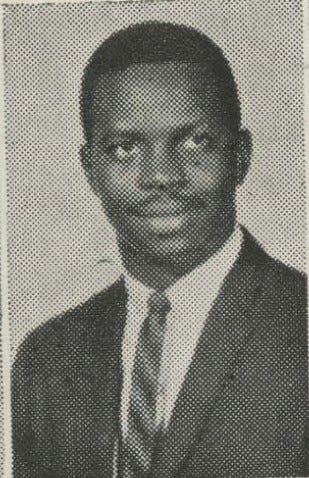
Dr. Ronald E. McNair

History will tell you that February 7, 1984 belongs only to the astronaut floating freely outside Challenger. That image survives because someone else stayed inside the spacecraft, seated at the controls, converting risk into distance and motion into restraint. That person was Ronald E. McNair.
The photograph in textbooks shows a human body floating free against the Earth. That image survives because McNair was doing the the work that does not photograph well. While cameras followed the untethered spacewalk, McNair was operating the Remote Manipulator System, a fifty-foot robotic arm moving through vacuum that required exact inputs, sustained correction, and no tolerance for drift.
Ronald McNair had to be right the first time. Every adjustment carried another human body through open space, close enough to machinery and velocity that failure would end the mission and possibly a life.
STS-41-B marked the first time a spacewalker was positioned using the arm’s foot restraint, a technical threshold that redefined what work in orbit could mean. Repair instead of observation. Servicing instead of spectacle. Tasks that assume the operator will remain exact even as the stakes tighten.
February 7 was a test of control under pressure, built through repetition and correction rather than bravado. McNair’s work that day sat inside equations, sightlines, and sustained inputs, holding another astronaut in place long enough for the task to be completed. It held lives in its math. It demanded trust without asking for attention. Error was never an option.
That competence did not originate in orbit. It was assembled earlier, in environments where error was corrected instead of excused and expectations were not lowered to preserve confidence. The steadiness McNair demonstrated inside Challenger was trained into him long before NASA trusted him with a robotic arm and another astronaut’s safety.
To understand what happened on February 7, 1984, you have to stop looking at the photograph and start tracing the discipline behind it. That discipline has a location.
It has a history.
It was built in North Carolina.
The building that now carries the name Ronald E. McNair Life History Center, dedicated in Lake City, South Carolina in January 2011, once functioned as a much smaller and far more efficient machine, a segregated public library whose job in 1959 was not to circulate knowledge but to enforce limits expected by segregation. The library enforced its rules with smiles and threats in equal measure without spectacle, and without ever having to admit that those limits were racial, violent, and enforced on children.
That is the building Ronald E. McNair entered at nine years old, accompanied by his mother Pearlie McNair, not as a protest but simply as a child. He was clear about what he wanted and already capable of understanding how he would need to be calm but persistent to accomplish a simple request.
The request was specific and direct. The books were not children’s stories. They were books on mathematics and science, subjects that made adults pause when they came from a Black child in the Jim Crow South which is why it caused trouble. Ronald McNair asked for them not because he was testing a boundary and not because he understood himself as a symbol, but because those were the subjects he was already working through, knew and understood. At nine years old he was teaching himself subjects that implied time, trajectory, and a future that exceeded the room.
The refusal followed, then the escalation, then the casual mention of police, the familiar Jim Crow Southern move where violence is introduced into the room without being named directly, a reminder of who holds authority and how quickly it can be exercised. When Ronald McNair did not move, when Pearlie McNair did not rush to explain or negotiate, the next mechanism engaged, the quiet Southern escalation that was meant to invoke fear.
He did not argue the rule. Ronald McNair did not perform defiance for an audience, but he also didn’t back down. Ronald McNair sat down and waited, body planted in the room, time turned into leverage, the institution forced to decide whether it was really willing to call the police on a Black child for wanting to learn calculus.
When asked what he intended to do, he said, “I’ll wait.” He stayed seated while the threat lingered in the room, Pearlie McNair remained beside him., both knowing this could end very badly. The police chief was contacted. The police chief declined to come. When the standoff finally collapsed under its own pettiness, an officer asked the question that ended it, “Why don’t you just give him the books?” The books were checked out. Ronald McNair said, “Thank you, ma’am.”
This moment has been told so often that it risks being shaped into inspiration, and while it is, I feel like its real weight lies elsewhere. Ronald McNair learned, before adolescence, how institutions rely on compliance to function, how quickly they reach for intimidation when challenged, and how fragile their authority becomes when they are forced to decide whether they are willing to show their hand fully and publicly. He learned that patience could outlast threat, that staying present could turn procedure into exposure, and that remaining seated sometimes carried more force than confrontation.
What the Lake City library taught Ronald McNair was how systems enforce hierarchy through procedure, threat, and expectation, lessons that mattered because they would be tested again at a larger scale when Ronald McNair left a segregated mill town and entered a public Black university in 1967, not as a prodigy sheltered from consequence but as a disciplined student stepping into an institution that did not lower standards to protect confidence.
Ronald McNair did not leave Lake City chasing possibility, he left because South Carolina built a scholarship system for black talent, but there was a reason they did this. Despite the underlying reason, McNair, with his aunt’s help, applied for and received a South Carolina state scholarship that made leaving possible. It was a program later described by his former lecturer Tom Sandin with a clarity the policy itself never offered, “the scholarship was given to any black student who would go out of state,” a mechanism designed less to cultivate talent than to export it, “their way of keeping blacks out [of South Carolina].”
McNair understood that arrangement for what it was and took it anyway, not mistaking access for generosity, but recognizing that movement was the only option left open by a system unwilling to keep him. His fascination with science, sharpened by the 1957 launch of Sputnik and sustained by Star Trek’s vision of technical competence under pressure, did not send him north dreaming of escape.
It sent him toward a place that would test whether discipline could be turned into capability. By the time he arrived in Greensboro in 1967, the posture learned in a segregated library had already been converted into motion, and motion had deposited him at an institution that did not exist to reward promise but to measure it relentlessly.
East Greensboro in 1967 was not a refuge from the South Ronald McNair knew, it was the South reorganized, power redistributed without disappearing, a public Black university operating under state neglect, federal scrutiny, and its own internal discipline, where seriousness was not encouraged but required because failure carried institutional consequence. North Carolina A&T State University did not exist to perform excellence for outside observers and it did not soften standards to protect confidence. It existed to produce graduates who could survive elsewhere, engineers, teachers, scientists, officers, people expected to enter white-dominated systems carrying competence heavy enough to outweigh hostility. The campus did not promise arrival. It promised work.
The Yard was not symbolic ground. It was lived space, crowded, watched, comparative, a place where students measured one another constantly and where seriousness showed quickly in posture, schedule, and silence rather than speeches. Academic rigor at A&T was enforced socially as much as administratively, through peer expectation and faculty judgment that did not indulge fantasy. Professors assumed preparation and punished its absence. There were no safety nets disguised as encouragement. Courses moved at pace. Labs did not wait. The institution did not apologize for demanding more from students who had already been denied more elsewhere.
Ronald McNair arrived inside that pressure as a disciplined student, not yet certain of the path, carrying intelligence sharpened by self-direction and resolve trained by endurance, but also carrying gaps that could not be talked around. Physics was not a romantic choice in this environment. It was a high-risk declaration. The department sorted quickly, not through cruelty but through accumulation, exams stacked on labs, labs stacked on theory, theory stacked on the assumption that students would keep up or move aside. Students changed majors quietly. Some left. Others stayed and absorbed the cost.
What distinguished McNair at this stage was not inevitability but posture. He moved through the campus with a visible seriousness, schedule heavy, attention narrow, working longer because the margin was thinner, knowing that one bad semester could close doors permanently. Faculty did not treat him as a symbol and neither did peers. He was measured by output. Grades mattered. Lab performance mattered. Preparation mattered. Ambition without execution meant nothing.
North Carolina A&T’s greatness during this period did not lie in comfort or protection but in its refusal to confuse access with achievement. The institution was already producing graduates who would go on to lead, teach, research, and serve under conditions far harsher than the campus itself, and it understood that indulgence was not a kindness. Physics at A&T was aspirational precisely because it was unforgiving. It demanded sustained attention, mathematical fluency, and tolerance for failure without collapse.
McNair did not arrive certain he would survive that demand. He arrived willing to submit to it. The same discipline that had kept him seated in a Lake City library now met a different test, not a single confrontation but continuous evaluation, not the threat of removal but the slow erosion of confidence that comes when standards never lower and time never pauses. This was not a trial to be won through patience alone. It required repetition, correction, and the willingness to stay inside difficulty long enough for competence to accumulate.
That pressure translated into routine. Ronald E. McNair lived a life at North Carolina A&T State University governed by accumulation rather than moments, days built around lectures, labs, and study sessions that bled into one another, weeks measured less by weekends than by exam cycles and problem sets that did not respect outside obligations. He was enrolled in engineering physics, a track that demanded mathematical fluency early and punished hesitation, and classmates recalled him as serious, rarely idle, a student who stayed longer than required because staying was cheaper than catching up later. His grades reflected that discipline. By the time he graduated in 1971, he did so magna cum laude, not as an anomaly but as the visible outcome of years spent refusing to let gaps remain unaddressed.
Life at A&T was not confined to classrooms, and McNair did not live as a monastic figure sealed off from campus culture. Music moved through his days as insistently as equations. He played the saxophone regularly, practicing between classes and taking gigs around Greensboro, R&B bands and campus-connected performances that paid a little money and kept his hands busy with something other than chalk and calculators. Music did not interrupt the work.
It ran alongside it, another discipline governed by repetition and control, something that demanded listening, timing, and endurance rather than flair. Those who knew him remembered the saxophone not as a dream he chased but as something he carried, worked into the margins of an already crowded schedule.
He trained his body the same way. McNair practiced karate seriously while at A&T, not as recreation but as discipline, drilling forms and sparring to build control under strain, a parallel system of instruction that mirrored the physics curriculum in its intolerance for sloppiness. The combination mattered. Friends later spoke of how deliberately he managed stress, how he sought systems that rewarded repetition and punished shortcuts, whether in labs, on the mat, or in music. None of it was accidental. All of it reinforced the same habits.
McNair was also a student among students. He joined Omega Psi Phi, following his brother’s path, and moved within circles that valued scholarship and service without mistaking either for spectacle. Recognition came during his undergraduate years, McNair earned distinctions including Presidential Scholar and Ford Foundation Fellow, honors that marked him as someone the institution believed could survive beyond it, though belief was never substituted for proof. Faculty did not lower standards because of those accolades. They expected him to carry them. Physics remained unforgiving. The work never eased.
By the time Ronald McNair left Greensboro, North Carolina had already done its shaping. He had learned how to live under sustained evaluation, how to stack disciplines without collapse, how to keep ambition tethered to execution, and survive in institutions that offered no applause for endurance, only success.
Leaving North Carolina did not resolve the pressure Ronald McNair had learned to live under. It multiplied it and changed its texture. When he departed Greensboro in 1971, degree in hand, he did not leave certain of the next terrain, only certain that the habits forged at North Carolina A&T State University would be tested without protection and without forgiveness, inside institutions that had not been built for him and would not pretend otherwise.
A recommendation from Tom Sandin carried him north to the Massachusetts Institute of Technology, but the scholarship that made the move possible carried its own threat, funding that could be withdrawn, expectations that were conditional, and the quiet knowledge that failure would not be read as individual miscalculation but as confirmation. He did not arrive simply as a student. He arrived as a Black man in a white institution where scrutiny preceded performance and where error carried racial weight long before it carried academic consequence.
MIT did not elevate McNair symbolically. It narrowed his margin. He entered classrooms filled with students whose educational pipelines had never been interrupted by segregation, whose familiarity with advanced laboratories predated college, whose confidence moved through white space without resistance because it had never been challenged, while his own presence was marked immediately, watched more closely, measured more aggressively, and afforded less patience for recovery.
Intelligence was assumed in the abstract but never extended evenly, and preparation gaps left by Southern public schooling were not contextualized or repaired, only exposed, often publicly, often without commentary, in a setting where being behind even briefly could trigger the loss of funding, standing, or future access.
McNair understood quickly that work ethic alone would not protect him, that excellence would have to be demonstrated repeatedly and without visible strain, and that survival required not just mastery of physics but mastery of how to remain intact while carrying the pressure of representation alongside the work itself.
McNair entered carrying gaps left by segregation and underfunding, and he closed them the only way he knew how, by working longer, repeating more, and accepting that falling behind even briefly could end the experiment altogether. He specialized in laser physics, a field intolerant of approximation, where error accumulated invisibly and precision was not optional. Midway through his doctoral work, the system delivered a blow that would have ended many academic careers without drama.
Two full years of research data were stolen, erasing painstaking experimental results and collapsing the timeline of his degree into uncertainty. There was no appeal process that could return that work. There was only reconstruction. McNair rebuilt it anyway.
He reproduced two years of results in a single year, not as a feat to be celebrated later but as the only path left open, compressing labor and attention the same way he had learned to do before, endurance converted into output under conditions that did not pause to acknowledge the loss.
He earned his Ph.D. in 1976, leaving MIT not as a symbol of access achieved but as someone already trained in how elite systems punish error and reward sustained control. During those years he met Cheryl Moore, a native of Queens, New York, through their shared church, building a life alongside the work rather than waiting for the work to stabilize.
What followed was not a rest. McNair published, lectured, and moved through academic and research environments that demanded results without explanation, including Texas Southern University and eventually Hughes Research Laboratories, where laser research shifted toward industrial and defense applications and where precision was no longer theoretical. At Hughes, he worked on chemical and high-pressure lasers, research that rewarded the same habits he had been accumulating for years, repetition, calibration, error management, the ability to hold complex systems steady under stress.
By the time NASA entered the picture, McNair was not chasing orbit. He was being sorted again. In 1978, more than 10,000 applicants sought selection. Thirty-five were chosen. McNair was one of them. Even then, the system did not ease its grip. A serious car accident left him injured enough that doctors questioned whether he would recover in time to begin training, the kind of interruption that could easily end career before it began.
McNair, always determined and persistent, recovered and began astronaut training in 1979, entering an environment where competence was assumed, visibility was secondary, and mistakes carried consequences that no longer belonged solely to the person making them.
NASA did not transform Ronald McNair. It absorbed him. Every system before it, A&T, MIT, Hughes, martial arts discipline, music, endurance learned under threat and sustained without applause, was converted into operational responsibility. By the time he reached February 7, 1984, he was not performing history. He was holding it steady.
The reason February 7, 1984 carries weight is not that it unfolded in space or that it produced striking images. It carries weight because every wrench turned, every camera adjusted, every sensor cable checked, every call logged, and every movement of the robotic arm represented decades of preparation compressed into execution under pressure, a setting where hesitation carried consequence rather than reassurance.
That preparation stretched from Greensboro classrooms and laboratory benches to MIT lecture halls and NASA simulators, and it converged without ceremony on a single workday in orbit. Ronald McNair did not arrive at Challenger untested. He arrived at a point where competence was assumed, then repeatedly verified through results, repetition, and survival inside systems designed to expose weakness quickly.
NASA’s shift in crew selection during the late 1970s, expanding beyond pilots to include scientists like McNair, marked a structural change in how missions were conceived and staffed. Long duration flight and on orbit research demanded more than flight skill.
Scientists selected for shuttle crews were required to pass the same physical screening, simulator cycles, and performance evaluations as test pilots, then demonstrate mastery of the shuttle’s subsystems at a level that allowed independent operation under failure conditions. McNair completed that qualification process in 1979 and was designated a mission specialist, a role that carried operational authority alongside scientific responsibility rather than observational participation.
On February 3, 1984, Space Shuttle Challenger launched from Kennedy Space Center on mission STS 41 B, the tenth shuttle flight, with a five member crew that included McNair, Commander Vance Brand, pilot Robert Gibson, and fellow mission specialists Bruce McCandless II and Robert Stewart. The mission plan was dense with objectives that mattered for future flight architecture. Two communications satellites were scheduled for deployment. Rendezvous sensors and flight control software were to be tested in orbit. Procedures and equipment intended for later missions were to be validated under real conditions rather than simulation.
McNair’s responsibilities on STS 41 B were functional rather than symbolic. He operated the Remote Manipulator System, the 50 foot robotic arm used to position hardware and crew with precise tolerances, and he conducted a range of mid deck experiments spanning biological observation and materials testing. The Canadian built arm was a control system, not a visual flourish. Its operation required continuous attention to feedback, alignment, and rate control, and its margin for error was narrow.
Accuracy depended on hundreds of simulator hours, engineering review, and rehearsed problem solving under time constraint. The focus required to run the arm in orbit was an extension of the discipline that carried McNair from an uncertain undergraduate path into elite research environments and through shuttle training standards that were designed to be unforgiving.
The fourth day of the mission, February 7, 1984, placed that preparation into direct use. Astronauts Bruce McCandless II and Robert Stewart conducted the first untethered spacewalks using the Manned Maneuvering Unit, a self contained propulsion system that allowed movement independent of the shuttle. The MMU represented a new class of operational risk. Its procedures relied on recently validated protocols that required precise positioning of foot restraints at the end of the robotic arm and careful alignment of the astronauts’ bodies relative to the shuttle’s motion and attitude.
McNair was not observing that sequence. He was executing it. Before McCandless and Stewart moved free of the vehicle, McNair positioned them using the manipulator arm with exacting control. That positioning had to account for the shuttle’s orbital motion, the astronauts’ center of mass, and the operating limits of the MMU simultaneously. A misalignment would not have produced drama.
It would have invalidated the procedure and introduced unacceptable risk, including the possibility of an astronaut drifting beyond recovery. On that day there was no opportunity for rehearsal. The only acceptable outcome was correct execution under conditions that did not soften for error.
On February 7 McNair earned that moment through a sequence of evaluations that never relaxed their standards. Laboratory work at North Carolina A and T where failure carried academic cost. Graduate level physics at MIT where error meant reworking an entire problem set. Shuttle simulators where mistakes could trigger mission abort scenarios. Each layer reinforced the next, until he could hold a robotic arm steady and place another human into open vacuum without tolerance for improvisation.
When Challenger landed back at Kennedy Space Center on February 11, 1984, after nearly eight days and 128 orbits, McNair had not simply accumulated flight time. He had converted preparation into outcome. He deployed hardware, managed payload operations, conducted experiments, and executed manipulator operations across repeated orbital cycles involving attitude control, rendezvous testing, and system monitoring. His logged hours represented a transition from student under pressure to operator within it.
February 7 endures because it demonstrates what disciplined rigor looks like when conditions refuse to wait for readiness. McNair’s competence was not inherited and it was not symbolic. It was built through institutions that measured him continuously, from North Carolina classrooms to shuttle flight control loops. The authority of that day belongs to him for a simple reason. He did not witness the first untethered spacewalk. He is the one who made it possible.
On the morning of January 28, 1986, the space shuttle Challenger lifted from the launch pad and came apart seventy three seconds later, breaking the sky open on live television in a way that millions of Americans were not prepared to understand or explain. Classrooms across the country had rolled in televisions because this launch was supposed to be ordinary, because a teacher was on board, because space had been sold to children as safe, procedural, mastered through checklists and rehearsals. What followed was not chaos so much as a stunned clarity, the moment when everyone watching understood at once that something irreversible had happened, smoke branching where a ship should have been, adults reaching for language that never arrived.
In North Carolina, the loss carried a different gravity. Ronald McNair was not an abstract national figure here. He was an Aggie. He was a son of the South. He was a man whose discipline had been shaped in Greensboro classrooms and laboratories, whose name moved through homes, schools, and churches that morning with pride and returned by afternoon as grief. The rupture traveled quickly through local news and hallway whispers, through children who grasped the truth before anyone explained it, through the sudden quiet that settles when a community realizes it has lost one of its own.
The Challenger disaster was national and it was intimate at the same time. It entered living rooms and schoolrooms together, collapsing distance and pretense. For a generation of North Carolina students who watched the screen that morning, the lesson was not abstract and it was not philosophical. It was the sight of preparation failing publicly, of brilliance and discipline still ending in absence, and of teachers struggling to explain why someone they had been taught to trust the sky with was simply gone.
Forty years after Challenger, Ronald McNair returned to North Carolina through movement rather than memorial. In January 2026, the campus in East Greensboro did not pause to mourn him again. It gathered to work in his name. The anniversary arrived without spectacle or nostalgia, carried instead by students moving across campus with poster tubes under their arms, faculty checking schedules, alumni stepping back into hallways they had not walked in decades, and a shared understanding that McNair’s life had left behind expectations that were still being enforced rather than admired.
The Dr. Ronald E. McNair Symposium and Graduate Fair unfolded over four days as an accumulation of work rather than ceremony. More than 160 TRiO McNair Scholars moved through campus tours, research presentations, and long conversations about graduate school pathways that offered neither comfort nor clarity, only direction. Nearly forty universities sent representatives, not to perform prestige, but to engage students already accustomed to pressure, students trained to defend their work aloud, absorb critique, revise, and continue. What mattered was readiness built through repetition, not motivation offered from a distance.
That seriousness showed itself most clearly in the people who spoke. They did not arrive as distant success stories or imported authority. They arrived as individuals who had once occupied the same classrooms, navigated the same corridors, and been shaped by the same expectations. Joletta Patrick spoke not as NASA mythology but as a Greensboro native who had learned, at flight control consoles, what precision demands when failure is not abstract. Dannellia Gladden-Green spoke as a physicist whose path echoed McNair’s without attempting to replicate it, describing systems that measured output relentlessly and offered no credit for belief alone. Students listened because the distance between their present and those futures felt measurable rather than imaginary.
The commemorative luncheon on January 28 did not drift into tribute. It held to structure. An overview of McNair’s undergraduate years opened the program, grounding the afternoon in labor rather than orbit. Cheryl McNair’s recorded words carried weight without excess. ROTC presentations, the Fellowship Gospel Choir, and the student art contest widened the frame without diluting it. When the panel opened for questions, the discussion stayed practical, centered on research demands, service obligations, discipline, and responsibility rather than legacy as abstraction.
The gathering did not close with a final word that settled anything. Students drifted back toward residence halls carrying notes and unfinished ideas. Faculty stayed behind in small knots, still talking. Alumni lingered near the building entrances longer than they expected to. The campus returned to its ordinary noise without ceremony, which was its own kind of truth. McNair had not been summoned to be admired and sent back to history. He had been brought into the present and left there.
That is what forty years looks like when a life has been taken seriously. Not reverence. Expectation. Not tribute. Work. Ronald McNair’s name still circulates in North Carolina not as a reminder of what was lost, but as a measure that continues to press forward, asking who is prepared to carry the discipline, the precision, and the patience that his life demanded, and whether they are willing to keep doing the work once the room empties and the day resumes.
That pressure remains. That is the inheritance.